The Mac Mini Fad: Is Buying One for AI Actually Worth It?
Cơn Sốt Mac Mini: Mua Để Chạy AI Có Thực Sự Đáng Không?
In early February 2026, Mac Minis started selling out. Not in the usual end-of-year holiday rush way. In the "vendors in Shenzhen's Huaqiangbei market charging 500 yuan markups, Apple Store wait times stretching to a month, Mac Studios on 54-day backorder" way.
Hầu hết mọi người mua Mac Mini cho OpenClaw không thực sự cần mô hình local. OpenClaw kết nối với cloud API theo mặc định. Khả năng luôn bật hoạt động hoàn toàn tốt với Claude hoặc GPT-4 trên đám mây.
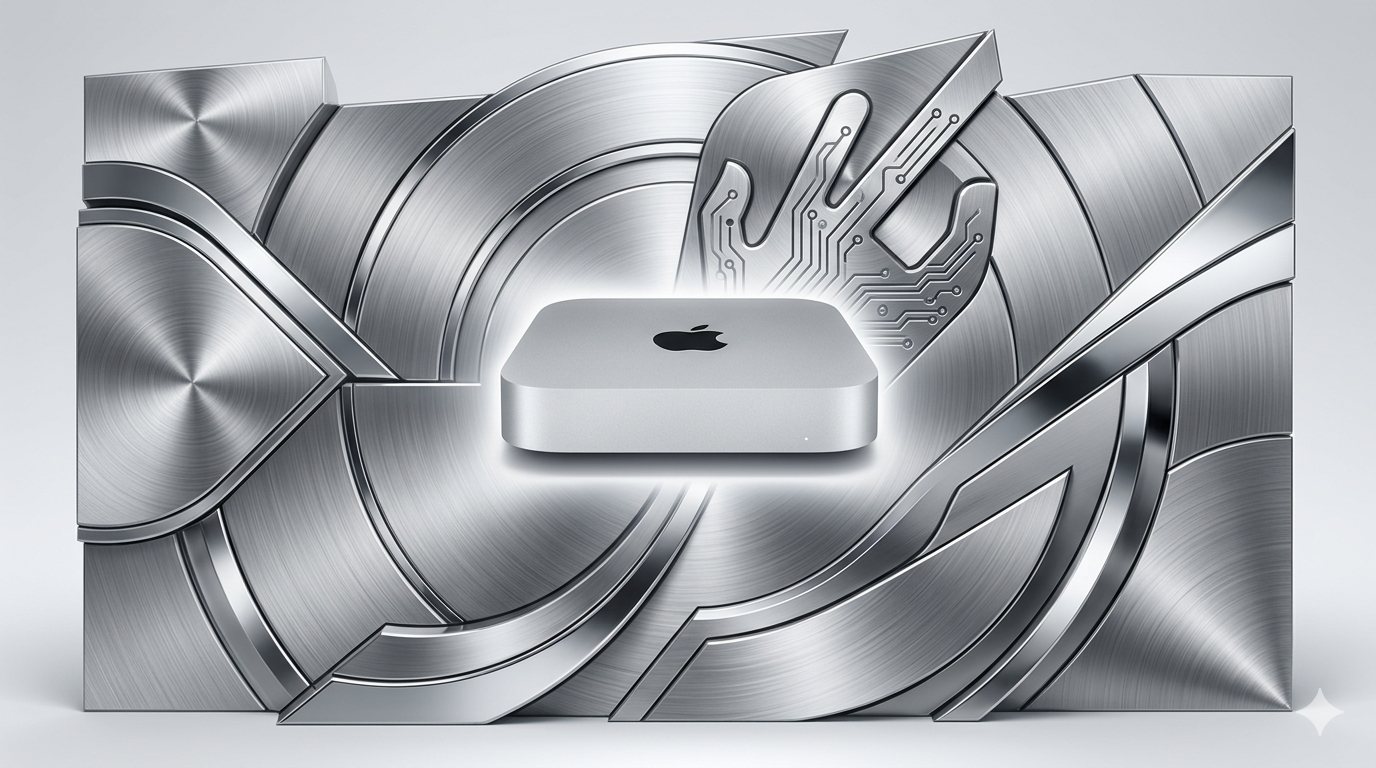
The Mac Mini Fad: Is Buying One for AI Actually Worth It?
In early February 2026, Mac Minis started selling out. Not in the usual end-of-year holiday rush way. In the “vendors in Shenzhen’s Huaqiangbei market charging 500 yuan markups, Apple Store wait times stretching to a month, Mac Studios on 54-day backorder” way.
The cause was OpenClaw, an open-source AI agent that lets you run a personal autonomous assistant 24/7 from your own hardware. The internet named it “the lobster.” Its mascot is a space lobster named Molty. People were buying Mac Minis to “raise lobsters.”
I want to be honest about this trend, because the hype has gotten genuinely absurd. And also, there is a real and legitimate use case buried under the noise.
What actually happened
OpenClaw was created by Austrian developer Peter Steinberger and first published in November 2025 under the name Clawdbot. It went viral in late January 2026, hitting 20,000 GitHub stars in a single day. By the time it settled into its current name, after a trademark dispute with Anthropic over the similarity to “Claude,” it had accumulated over 247,000 GitHub stars, making it one of the fastest-growing open-source projects in history.
What OpenClaw actually does: it connects to a large language model, either cloud-based like Claude or GPT-4, or a local model running via Ollama, and uses messaging platforms like WhatsApp, Telegram, Slack, and iMessage as its interface. You send it a message, it takes action. It manages files, sends emails, browses the web, runs shell commands, and maintains persistent memory across sessions. It is designed to run 24/7, autonomously, on your own hardware.
The Mac Mini became the unofficial reference hardware because it draws only 8 to 15 watts at idle, roughly $15 to $25 per year in electricity for always-on operation, and runs completely silently.
Mac Minis with high unified memory, 32GB, 48GB, and 64GB configurations, sold out at multiple retailers across Asia. Secondhand prices rose sharply. Wait times at Apple’s official stores stretched to weeks.
Why people wanted local models
The appeal of running a local LLM alongside OpenClaw is partly about cost. Cloud AI subscriptions run around $20 per month each. A dedicated Mac Mini M4 at $599 theoretically pays for itself in about 15 months of eliminated subscriptions.
But the bigger driver was privacy. OpenClaw grants your AI agent significant access to your system: file management, shell commands, message monitoring, web browsing. Many people were uncomfortable routing all of that through Anthropic or OpenAI’s servers. Running a local 7B or 14B model via Ollama means your data stays on your device.
The Mac Mini’s unified memory architecture makes this possible in a way traditional PCs cannot match. An M4 Mac Mini with 32GB unified memory has that entire pool available for model weights, shared seamlessly between CPU and GPU. Apple’s MLX framework can run 7B-8B models at 25 to 35 tokens per second. That is fast enough to feel genuinely interactive.
What the hype glossed over
OpenClaw had serious security problems immediately after going viral. Security researchers found roughly 1,000 instances online with zero authentication, fully exposed to the internet. One researcher gained access to Anthropic API keys, Telegram tokens, and full command execution on exposed instances without much effort. A Kaspersky security audit identified 512 vulnerabilities, 8 critical.
Then ClawHub, OpenClaw’s plugin marketplace, became a malware distribution vector. Out of approximately 10,700 skills listed, over 820 were malicious, using names like “solana-wallet-tracker” to appear legitimate while silently installing keyloggers or macOS Atomic Stealer malware. A critical remote code execution vulnerability with a CVSS score of 8.8 required an emergency patch.
The local model performance gap is real. An RTX 4090 delivers 2 to 3 times the tokens per second of a Mac Mini M4 Pro for the same model. For users who need real-time voice AI or batch processing, NVIDIA hardware wins decisively.
Memory is soldered and cannot be upgraded. Every AMD mini PC at the $600 to $800 range ships with user-accessible memory slots you can upgrade later. On a Mac Mini, you choose at purchase and that is permanent. When a model’s weights exceed your unified memory, macOS starts swapping to SSD. Benchmarks show a 32B model dropping from roughly 10 tokens per second to 0.28 tokens per second after hitting the memory wall. That is slower than reading aloud.
Most people who bought Mac Minis for OpenClaw did not actually need local models. OpenClaw connects to cloud APIs by default. The always-on capability and agentic behavior work perfectly well with Claude or GPT-4 in the cloud.
What the Mac Mini is actually good for
When you strip away the hype, there is a genuine use case.
If you want a dedicated, always-on machine for personal AI use that runs locally, silently, cheaply, and reliably on 7B to 14B models, the Mac Mini M4 is probably the best device you can buy for that specific purpose right now. Former Tesla AI director Andrej Karpathy called Apple’s unified memory architecture ideal for personal LLM usage. ML researcher Sebastian Raschka runs 20B-parameter models at around 45 tokens per second on his daily.
A 2025 survey found that 73% of CIOs cited AI processing as the top reason for increasing Mac hardware investment. The enterprise use case, sensitive data that cannot leave the device and compliance requirements for private inference, is legitimate and the math often works.
My honest take
If you are a developer, researcher, or someone who handles genuinely sensitive data and wants private, always-on AI capability, the Mac Mini M4 Pro with 24 to 48GB is probably the right buy. The software stack is mature, setup takes minutes, and the energy efficiency and silence are genuinely valuable in a device you are running 24/7.
If you are buying a Mac Mini because OpenClaw went viral and everyone on AI Twitter was posting about their lobsters, wait. The core OpenClaw use case does not require local inference. The security situation improved but is still evolving fast.
The Mac Mini is not a fad. The particular wave of panic-buying driven by OpenClaw hype probably was one. The hardware is real and useful. The idea that everyone needs dedicated local AI hardware is not.
Buy it when you have a specific use case that justifies it. Not because the lobster went viral.
Sources: Tom’s Hardware, TechRadar, South China Morning Post, OpenClaw Blog, SecurityDispatch, Compute Market, February to April 2026.
Vào đầu tháng 2/2026, Mac Mini bắt đầu hết hàng. Không phải theo kiểu rush cuối năm thông thường. Mà theo kiểu "các nhà bán lẻ ở Huaqiangbei, Thâm Quyến tăng giá 500 nhân dân tệ, thời gian chờ Apple Store kéo dài một tháng, Mac Studio chờ 54 ngày."
Nguyên nhân là OpenClaw, một AI agent mã nguồn mở cho phép bạn chạy trợ lý tự động cá nhân 24/7 từ phần cứng của chính mình. Internet gọi nó là "con tôm hùm." Mọi người mua Mac Mini để "nuôi tôm hùm."
Tôi muốn thành thật về xu hướng này, vì sự cường điệu xung quanh nó thực sự trở nên vô lý. Và cũng có một use case thực sự và hợp lệ ẩn bên dưới tiếng ồn.
Thực ra điều gì đã xảy ra
OpenClaw được tạo bởi developer người Áo Peter Steinberger, xuất bản lần đầu vào tháng 11/2025 dưới tên Clawdbot. Nó viral vào cuối tháng 1/2026, đạt 20.000 GitHub stars trong một ngày. Đến khi ổn định với tên hiện tại, sau tranh chấp nhãn hiệu với Anthropic về sự tương đồng với "Claude," nó đã tích lũy hơn 247.000 GitHub stars.
OpenClaw kết nối với một mô hình ngôn ngữ lớn, đám mây như Claude hoặc GPT-4, hoặc mô hình local qua Ollama, và sử dụng các nền tảng nhắn tin như WhatsApp, Telegram, Slack, iMessage làm giao diện. Bạn gửi tin nhắn, nó hành động. Nó quản lý tệp, gửi email, duyệt web, chạy lệnh shell, duy trì bộ nhớ liên tục qua các phiên.
Mac Mini trở thành phần cứng tham chiếu không chính thức vì chỉ tiêu thụ 8 đến 15 watt khi idle, khoảng 350.000 đến 580.000 VND mỗi năm tiền điện cho hoạt động 24/7, và chạy hoàn toàn im lặng.
Tại sao mọi người muốn mô hình local
Sức hút không chỉ là chi phí. Đăng ký AI đám mây tốn khoảng 500.000 VND mỗi tháng mỗi dịch vụ. Mac Mini M4 ở 599 USD lý thuyết hoàn vốn trong khoảng 15 tháng.
Nhưng động lực lớn hơn là quyền riêng tư. OpenClaw cấp cho AI agent của bạn quyền truy cập đáng kể vào hệ thống: quản lý tệp, lệnh shell, theo dõi tin nhắn. Chạy mô hình local qua Ollama có nghĩa là dữ liệu của bạn ở trên thiết bị.
Kiến trúc bộ nhớ thống nhất của Mac Mini làm cho điều này khả thi theo cách PC truyền thống không thể. Mac Mini M4 với 32GB bộ nhớ thống nhất có toàn bộ pool đó để dành cho model weights. Framework MLX của Apple có thể chạy các mô hình 7B-8B ở 25 đến 35 token mỗi giây.
Những gì cơn sốt đã bỏ qua
OpenClaw có vấn đề bảo mật nghiêm trọng ngay sau khi viral. Các nhà nghiên cứu bảo mật phát hiện khoảng 1.000 instances online không có xác thực. Một nhà nghiên cứu truy cập được Anthropic API keys, Telegram tokens, và thực thi lệnh đầy đủ. Kiểm toán bảo mật Kaspersky xác định 512 lỗ hổng, 8 nghiêm trọng.
ClawHub, marketplace plugin của OpenClaw, trở thành vector phân phối malware. Trong khoảng 10.700 skills, hơn 820 là độc hại, cài đặt keylogger hoặc Atomic Stealer malware.
Khoảng cách hiệu suất mô hình local là có thực. RTX 4090 tạo ra token nhanh gấp 2 đến 3 lần Mac Mini M4 Pro. Với người dùng cần AI giọng nói thời gian thực, phần cứng NVIDIA thắng quyết định.
RAM được hàn vào board và không thể nâng cấp. Khi weights mô hình vượt quá bộ nhớ thống nhất, macOS bắt đầu swap sang SSD. Benchmark cho thấy mô hình 32B giảm từ khoảng 10 token mỗi giây xuống còn 0,28 token mỗi giây. Chậm hơn cả đọc to.
Hầu hết mọi người mua Mac Mini cho OpenClaw không thực sự cần mô hình local. OpenClaw kết nối với cloud API theo mặc định. Khả năng luôn bật hoạt động hoàn toàn tốt với Claude hoặc GPT-4 trên đám mây.
Mac Mini thực sự tốt cho điều gì
Nếu bạn muốn một máy chuyên dụng, luôn bật cho AI cá nhân chạy local, im lặng, rẻ tiền điện, đáng tin cậy với các mô hình 7B đến 14B, Mac Mini M4 có lẽ là thiết bị tốt nhất bạn có thể mua cho mục đích đó ngay bây giờ.
Trường hợp doanh nghiệp là hợp lệ: dữ liệu nhạy cảm không thể rời khỏi thiết bị, yêu cầu tuân thủ, inference riêng tư cho nhóm. Cuộc khảo sát năm 2025 cho thấy 73% CIOs coi xử lý AI là lý do hàng đầu để tăng đầu tư phần cứng Mac.
Quan điểm thành thật của tôi
Nếu bạn là developer, nhà nghiên cứu, hoặc người xử lý dữ liệu nhạy cảm và muốn khả năng AI riêng tư, luôn bật, Mac Mini M4 Pro với 24 đến 48GB có lẽ là lựa chọn đúng.
Nếu bạn mua vì OpenClaw viral và mọi người trên AI Twitter đang đăng về những con tôm hùm, hãy chờ. Use case cốt lõi của OpenClaw không yêu cầu inference local. Tình hình bảo mật đã cải thiện nhưng vẫn đang phát triển nhanh.
Mac Mini không phải là trào lưu nhất thời. Đợt mua hoảng loạn do cơn sốt OpenClaw có lẽ là vậy. Phần cứng là thực và hữu ích. Quan điểm rằng mọi người đều cần phần cứng AI local chuyên dụng thì không.
Mua khi bạn có use case cụ thể biện minh cho nó. Không phải vì con tôm hùm đã viral.
Nguồn: Tom's Hardware, TechRadar, South China Morning Post, OpenClaw Blog, SecurityDispatch, Compute Market, tháng 2 đến tháng 4/2026.